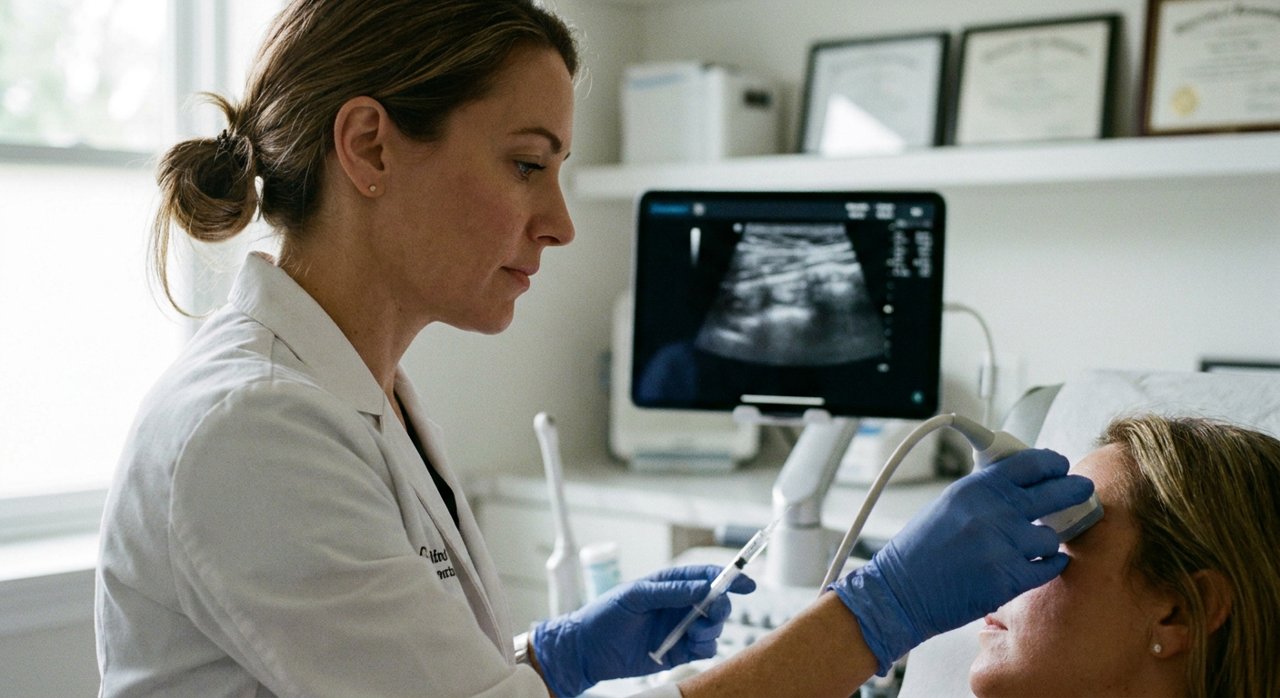
Filler-induced arterial occlusion is the emergency every injector rehearses for. Published in Aesthetic Surgery Journal Open Forum on November 4, 2025, this paper pairs a pictorial case series of 3 institutional ischemia cases, all worked up with ultrasound, with a systematic review (88 studies screened, 9 included) for a combined look at 83 cases.
The headline is dose. Blind "flooding" of a region averages 1519.4 IU of hyaluronidase across the literature. Ultrasound-targeted injection needed a fraction of that: most patients resolved on only 30 to 150 IU, and the institutional cases used 150 to 450 U per targeted injection. Speed tracked with targeting too. Once the occluded vessel was directly imaged and injected, symptoms resolved within about 15 minutes in many cases. Recovery was near-universal and complete. The only two slow recoveries (38 and 56 days) traced to delayed presentation, not to dose, and across 80 literature cases outcomes were complete except for those two and two unclear.
The takeaway is procedural, not theoretical: keep an ultrasound probe on the table for facial filler. When you suspect occlusion, image the vessel and inject hyaluronidase into it rather than flooding the whole region. You reperfuse faster on a fraction of the drug. Time-to-treatment is the dominant outcome driver here, so escalate straight to imaging-guided dosing instead of re-dosing blindly and waiting to see what happens.
Source: Aesthetic Surgery Journal Open Forum — https://pmc.ncbi.nlm.nih.gov/articles/PMC12586333/